

Yes – moth traps work, though not always in the way most people expect. A pheromone trap tells you whether you have moths, which type, and how bad the problem is, and each male it catches is one fewer able to mate. Clearing an infestation completely, though, often takes more than moth traps alone.
At PestBuddy, moth traps are among the products we're asked about most. Most of the disappointment we hear about comes down to what people expect them to do. The good news is that those who combine moth traps with the other basics – spraying, thorough cleaning and removing infested food – are more likely to clear the problem themselves without needing to call in a professional.
This guide covers what moth traps do well, where they fall short, and how to use them effectively.
📋 Quick summary: do moth traps work?
- What they do. Pheromone traps lure male moths onto a sticky pad, confirming what you're dealing with and how bad it is. Every male caught is one fewer able to mate.
- What they don't do. Traps only catch males, so females may continue laying, and it is their larvae that go on to eat your clothes and food if not controlled.
- Use the right trap for the moth. Clothes moth and pantry moth traps use different pheromones and won't cross-catch.
-
Replace pads roughly every 3 months and keep traps up year-round since moth activity doesn't stop in winter.
-
Pair traps with cleaning and a targeted spray to deal with the stage doing the damage – or use a kit with both.
How pheromone moth traps actually work
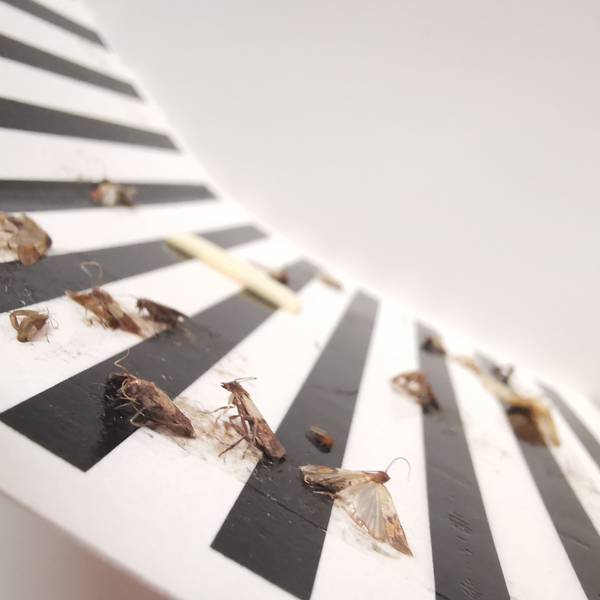
The moth traps you'll use at home are pheromone traps. Each pad contains a synthetic copy of the scent a female moth releases to attract a mate. Male moths follow the scent, land on the sticky surface, and stay there.
That is the whole mechanism and it works without insecticide, vapour, or anything else being released into the room. It is why pheromone pads are non-toxic and safe to place close to the things you are protecting - clothes moth pads in wardrobes and drawers, pantry moth pads in food cupboards.
What moth traps do well
Used properly, a pheromone trap answers three questions faster than anything else:
- Do I actually have moths? A catch confirms the species is present, and rules out the guesswork about whether what you saw was a moth or something harmless.
- Which moth is it? Because the pheromones are species-specific, a catch on a clothes moth trap versus a pantry moth trap tells you where to focus.
- How bad is it? One or two moths over a month is background activity rather than an infestation. A pad filling up in a week means an established breeding population nearby.
Traps give you an early warning, flagging a potential problem before you find any damage. Moth larvae feed out of sight - in wardrobe corners, or inside packets at the back of a cupboard. Without traps, most infestations are only discovered once some damage has occurred, by which point the larvae may have been feeding for weeks.
What's more, after you've cleaned and treated, an empty trap for several consecutive weeks is a great way to confirm the treatment worked, as long as the pad is still in date.
Catching males does remove some breeding pressure too – fewer males means fewer fertilised eggs and ultimately larvae. It's a genuine benefit, though a single surviving male can fertilise several females, so it lowers the egg count rather than stopping it.
What moth traps can't do
Pheromone traps only attract males. The females – each laying 40 to 50 eggs on your woollens, or up to a few hundred on stored food, depending on species – aren't drawn to the trap at all. And the damage itself is never done by adult moths, which don't feed on fabric or food. It's the larvae, hatching and eating out of sight in dark, undisturbed corners.
This is the single most common misunderstanding we see: customers go after the adult moths they can see - swatting them, trapping them - while the larvae carry on eating your clothes or pantry products. Repeated catches mean larvae are likely to be developing somewhere nearby.
📋 Our rule of thumb
A trap catching moths week after week is telling you there is a larval population nearby. No amount of trapping will outrun a breeding site. That's your signal to find and treat the source: vacuum thoroughly, hot-wash (above 50°C) or freeze affected textiles, clear out infested food, and treat the cracks and crevices where larvae develop.
Clothes moth traps vs pantry moth traps: use the right one
Clothes moths and pantry moths are different pests and need different traps, which catches a lot of people out. The pheromones are species-specific, so a clothes moth trap in your food cupboard will sit empty while pantry moths continue breeding beside it.
- Clothes moth traps go in wardrobes, drawers and anywhere you store wool, silk, fur or feathers.
- Pantry moth traps go in food cupboards and pantries, near dried goods, grains and cereals.
Not sure which you have? Put one of each up and let the catch tell you – that's exactly the job traps are best at.
Where sprays fit alongside traps
Our experience shows that people who use traps alongside other methods such as spraying, cleaning, packing clothes away properly and clearing out infested food are far more likely to resolve the problem without professional help. Traps on their own rarely get there – the combination does.
Traps tell you what you are dealing with. Sprays are what treats it. They reach what a pheromone lure was never designed to touch – the larvae and eggs tucked into carpet edges, skirting and wardrobe corners. Our approach is to clean and trap first, then bring in a spray once the traps show a breeding population rather than a stray moth or two.
In short: a pesticide-free knockdown spray deals with the adults you can see, while longer-lasting moth sprays are what actually address a larvae problem, treating the harbourages where they develop. Always read and follow the label, ventilate, and keep children and pets away until treated surfaces are dry. Our expert guide to getting rid of moths covers choosing and using moth sprays safely.
If you'd rather have everything in one place, our moth control kits contain all you need in one box – pheromone pads and hangers to monitor, plus a spray to treat what they find.

How to get the most out of moth traps
- Place them where moths live – inside wardrobes, near stored textiles, or in food cupboards, in still air rather than draughts or direct sunlight.
- Keep them away from repellents. Lavender, cedar and repellent sprays mask the lure. Both have their place: use scented deterrents in storage you are not monitoring, and keep the wardrobe with the trap in it free of them.
- Replace pads roughly every 3 months. In our experience that's how long the pheromone stays effective; an old pad quietly stops catching, which reads as "problem solved" when it isn't.
- Keep them up year-round. Moths get talked about as a summer pest, but clothes moth activity stays fairly steady all year, because central heating keeps homes warm enough for them to keep breeding through winter.
- Pair them with prevention. A trap tells you what is happening but it does not stop moths alone. Store woollens clean and covered, keep dried food in airtight glass or hard plastic containers, and vacuum the quiet corners where larvae feed.
When to step things up
Use the trap to monitor the infestation. If it is empty for weeks then there is a good chance you're winning the battle. If catches do not fall after a full clean, hot-wash and treatment cycle, or activity spreads across more than one room, consider a BPCA-registered professional, who can find a larval source you've missed.
FAQs: do moth traps work?
How many moths in a trap is a problem?
One or two over a month is low-level background activity. Several in a week – or a pad filling steadily – points to an established breeding population nearby, so move from monitoring to cleaning and treatment.
Do moth traps attract more moths into the house?
No. The pheromone works over short range indoors and draws in males already present – it won't pull moths in from outside your home.
How long do moth traps last?
Around 3 months once opened – after that the pheromone fades and catches drop off even if moths are still about. Replace pads on a regular cycle rather than waiting for them to look full.
Do I need a moth spray as well as traps?
If you're catching moths repeatedly, yes – traps monitor, sprays treat. For a stray moth or two, thorough cleaning and traps alone may be enough.
Where should I put moth traps?
Clothes moth traps inside wardrobes and drawers near natural fibres; pantry moth traps in food cupboards near dried goods. Choose dark, undisturbed spots away from draughts and away from lavender or cedar repellents.
Final thoughts
So, do moth traps actually work?
Yes, moth traps work for the job they're designed to do. In addition to some control, they tell you what type of moth you have, how bad it is, and whether your treatment worked, without any insecticide.
What they will not do is clear an infestation while the larvae are still feeding somewhere out of sight. If the catches keep coming, then its essential to clean, treat the harbourages with a targeted spray, and leave the traps up afterwards to tell you if it comes back.
Ready to find out what you're dealing with? Explore our range of non-toxic moth traps, or get traps and spray together in our moth control kits.


